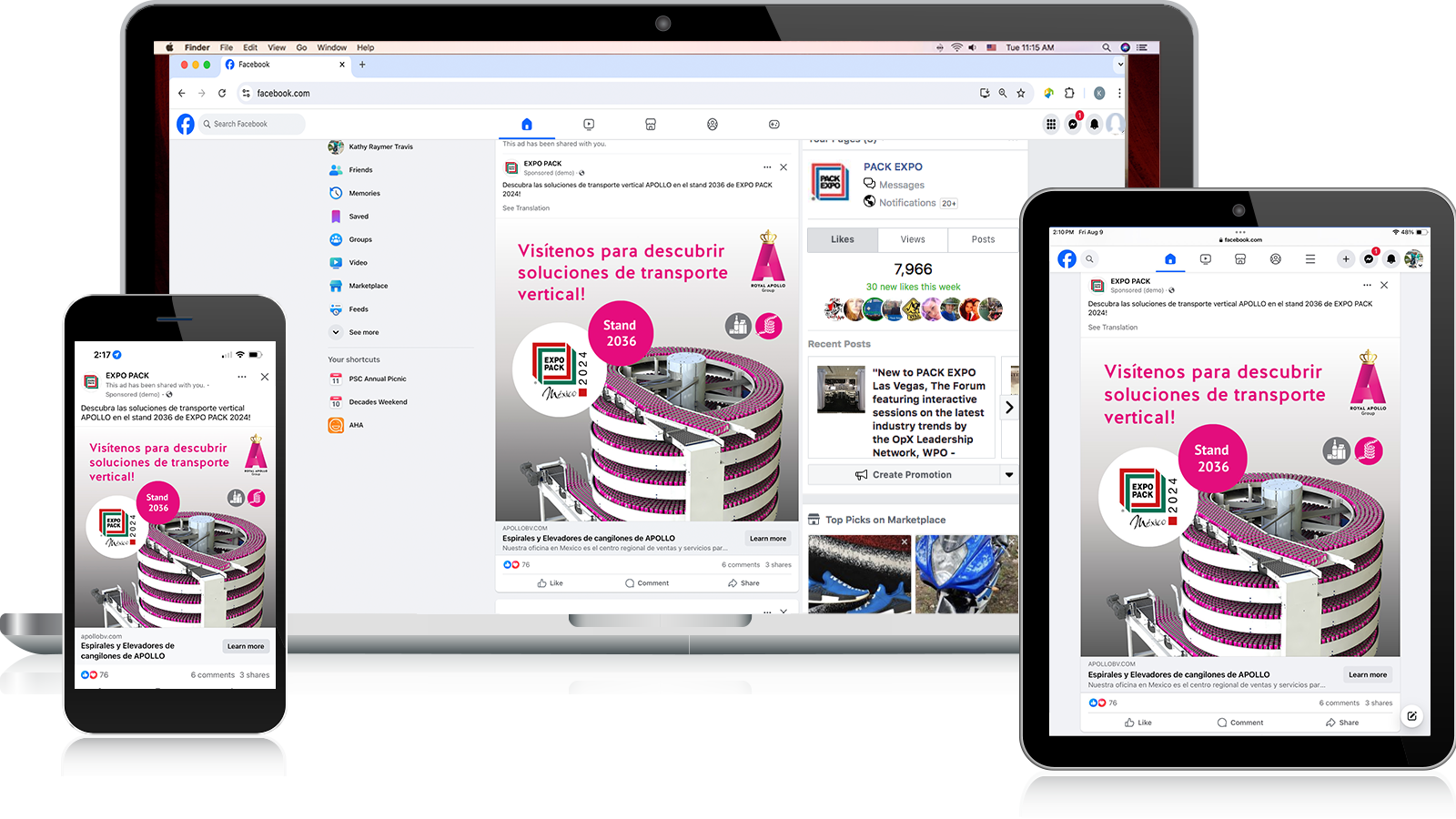
Q: Why should I use a Facebook post over a LinkedIn post?
A: 70% of US adults use Facebook vs 32% using LinkedIn. The average Facebook user logs in 8 times per day and spends 30 minutes per day on Facebook.
Q. Why is inventory limited for PMMI Audience Network products?
A. Here is a great presentation on Joan regarding this topic. In summary, inventory for LinkedIn and Facebook is limited because they serve ads through a per-impression auction where ads targeting the same audience and format compete based on bid and relevance. Competition increases with the more ads targeting the same audience. When competition increases—especially if we run multiple PMG campaigns to the same individuals—CPMs rise, and with fixed budgets that means fewer impressions and weaker performance across campaigns. To prevent self-competition and protect delivery, we cap inventory based on testing that balances maximum available reach with stable campaign results.
Q. Why are the pageviews that are reported by Google Analytics not matching up with the number of clicks reported by Facebook?
A. Site attribution and traffic reporting are not perfect, and discrepancies between platforms are expected. In fact, it’s typical to see Facebook report 15% to 40% more clicks than GA4 sessions. This gap stems from several factors, including differences in how clicks and sessions are measured, tracking delays, privacy filters, and non-human activity. Google has published multiple explanations for these mismatches.
Q. Can you give us a brief overview on our process for eliminating bots and non-human impressions?
A. LinkedIn/Facebook are in control over the reporting and eliminating or bots/non-human impressions. We do not know what their policy is and cannot provide any information regarding those policies. What we can control and comment on is that we upload our audience to Facebook. We do not use the find look alike audience expansion feature that Facebook has, so it is indeed just our known first party audience.
Q. How does Facebook optimization work with a PMG audience?
A. When we create a social campaign, we provide Facebook with the list of our selected audience and tell Facebook that this is who we'd like to reach with this ad. Facebook can identify the people on our list, which is where the "match" occurs. These are names both within our system and Facebook. Due to this, Facebook has action data on these individuals from our list—whether an individual watches video ads regularly, clicks often, or is more likely to comment. When we hand our audience list over to Facebook, we tell Facebook the type of person we want to reach—a clicker, a watcher, or a commenter. They then serve the ad to individuals on the list we provided who have the highest probability of completing that action. Facebook only allows us to optimize for one action (clicking, watching, or commenting) for a campaign.
Q. Why do we optimize videos for views and posts for clicks?
A. For video campaigns, we optimize for views because the goal is to get end-users to watch their video. This is their opportunity to get in front of our audience for an extended period of time and share a detailed message about why they should choose the advertiser's solution. When they provide a video we want to show it to people that are more likely to watch videos, so they have the opportunity to tell their full story. For static campaigns, it's Clicks, impressions, and reach because that product's goal is to get people to click.
Q. Can we give leads for Mundo campaigns?
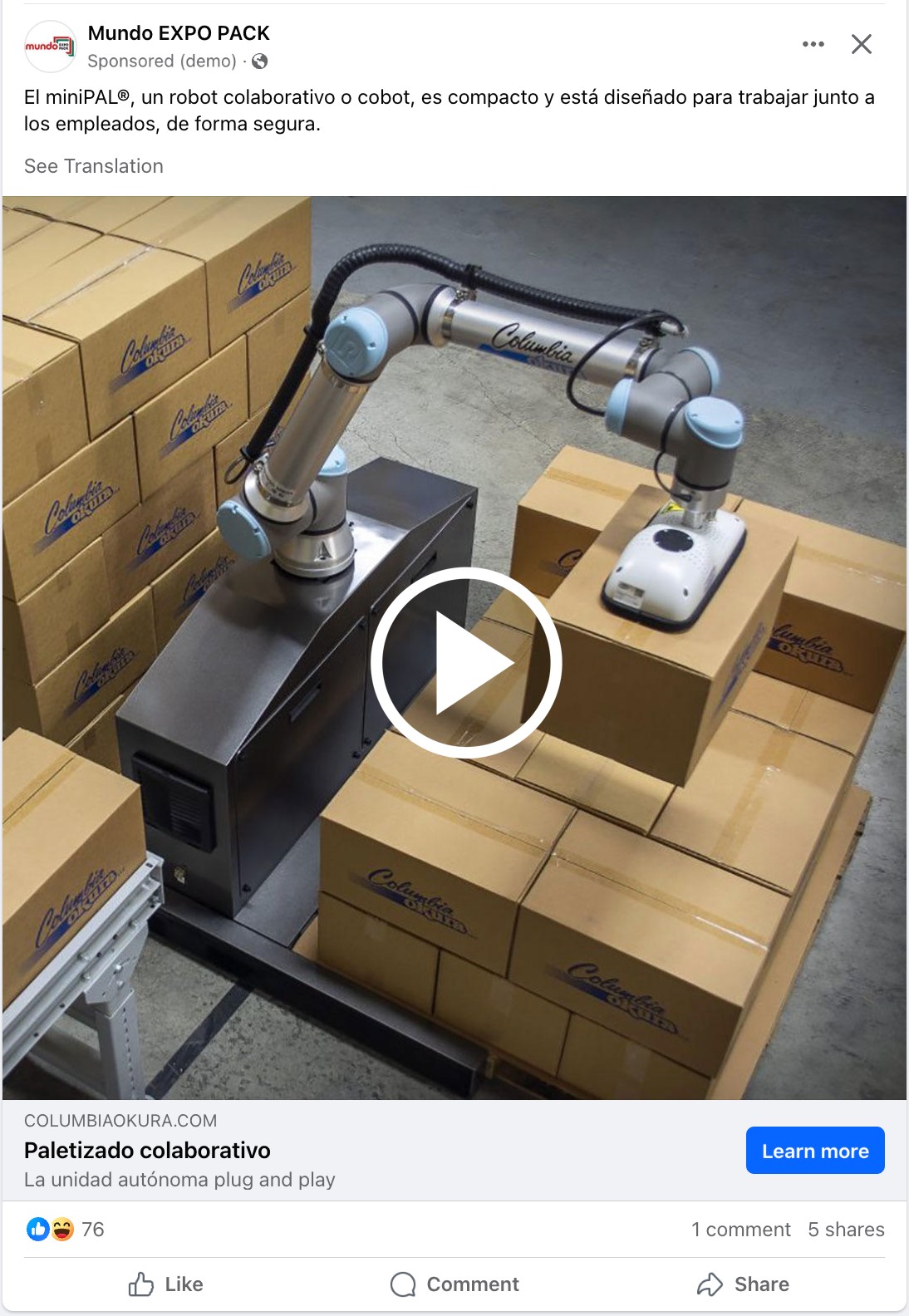
A. Even though we cannot give lead information, commenters have been very engaged (such as “give me details” or “more information”) and advertisers can reach out to those commenters on their own through Facebook.